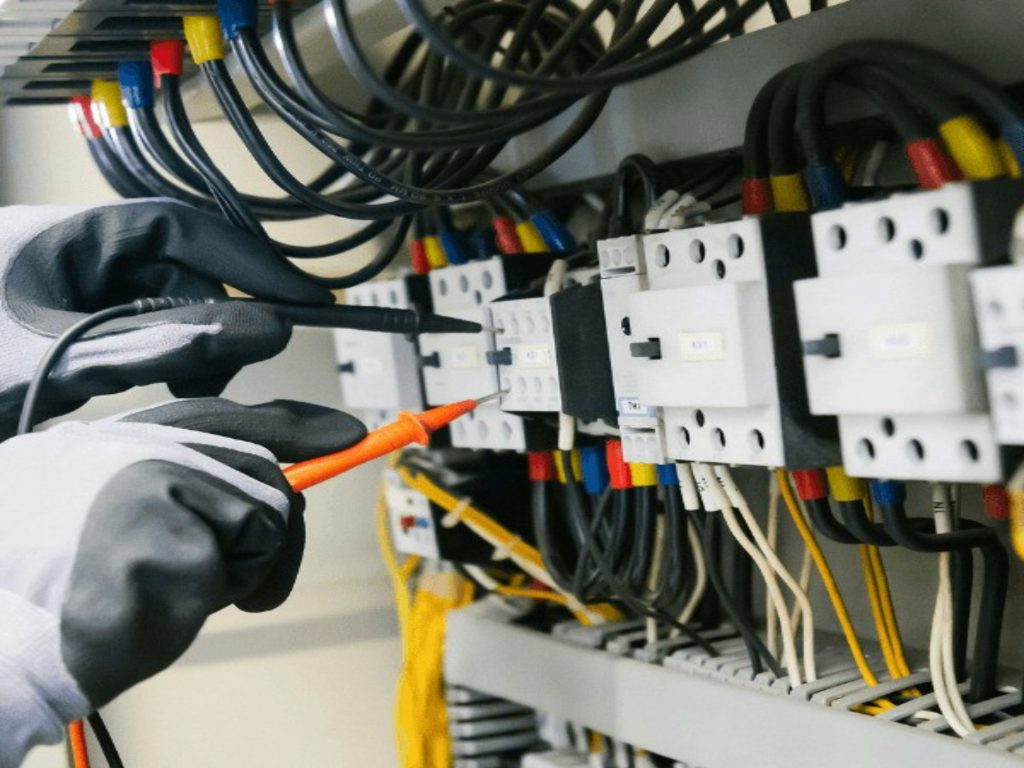
If you let a property in England, you need a valid Electrical Installation Condition Report. It is not optional, the penalties are significant, and in our experience it is the certificate landlords most often forget — usually because, unlike the gas check, it does not come round every year to remind you.
Here is what it is and what you actually have to do.
What an EICR is
An EICR is a formal inspection of the fixed electrical installation in a property: the consumer unit (fuse box), the wiring, the sockets, the light switches, and anything permanently connected such as an electric shower or a fixed heater.
It does not cover appliances. Your tenant’s kettle, the washing machine, the microwave — none of that is part of an EICR. If you provide appliances and want them checked, that is PAT testing, which is a separate thing and is not legally required in the same way.
A qualified electrician inspects and tests the installation against current standards, records what they find, and issues the report as either satisfactory or unsatisfactory.
What the law actually requires
Under the Electrical Safety Standards in the Private Rented Sector (England) Regulations 2020, landlords must:
- have the electrical installation inspected and tested at least every five years — or more often if the report itself specifies a shorter interval
- give a copy of the report to existing tenants within 28 days of the inspection
- give a copy to new tenants before they move in
- supply a copy to the local authority within seven days if they request one
- where the report is unsatisfactory, complete the remedial work and obtain written confirmation it has been done
That five-year interval is a maximum, not a target. If your electrician writes “recommended next inspection: 3 years” on the report, three years is your deadline.
Understanding the codes
This is where most landlords get confused, so it is worth being precise.
C1 — Danger present. Something on the installation poses an immediate risk. The property should not be let until it is resolved, and a competent electrician will usually make it safe before leaving.
C2 — Potentially dangerous. Not an immediate danger, but it could become one. Remedial work must be completed within 28 days of the report, or sooner if the report specifies.
C3 — Improvement recommended. The installation does not meet current standards but is not dangerous. This is advisory. A C3 on its own does not make a report unsatisfactory and does not legally require work.
FI — Further investigation required. The electrician could not determine whether something is safe without more work. This one catches people out: an FI makes a report unsatisfactory in the same way a C1 or C2 does.
So: any C1, C2 or FI means an unsatisfactory report and a 28-day clock. A report with only C3s is satisfactory, and you can decide for yourself whether the improvements are worth making.
What happens if you do not have one
Local authorities can impose civil penalties of up to £30,000 for breaching these regulations. Beyond the fine, a missing or invalid EICR can undermine a possession claim — which means a compliance oversight from two years ago can become the reason you cannot regain your property when you need to.
What it costs and how long it takes
For a typical two or three-bedroom home, expect somewhere in the region of £150–£300 depending on the size of the property and the number of circuits, with the inspection itself usually taking two to four hours. Larger properties, HMOs and older installations cost more and take longer.
Budget separately for remedial work. On an older property that has never been inspected, it is common for the first EICR to throw up work — most often an outdated consumer unit or a lack of RCD protection. It is worth treating that first inspection as a survey rather than a formality.
The practical advice
Book the EICR before you market the property, not after you have a tenant lined up. If the report comes back unsatisfactory and needs a consumer unit replaced, you want to find that out with an empty property and a flexible start date, not with a tenant holding a signed tenancy and a removal van booked.
And diarise the renewal. Five years is long enough to forget entirely.
How Lova handles this: for our fully managed landlords, we track EICR, Gas Safety and EPC expiry dates and arrange renewals before they lapse — and because our refurbishment team is in-house, any remedial work identified is quoted and completed by the same people, rather than passed to a contractor you then have to chase.